
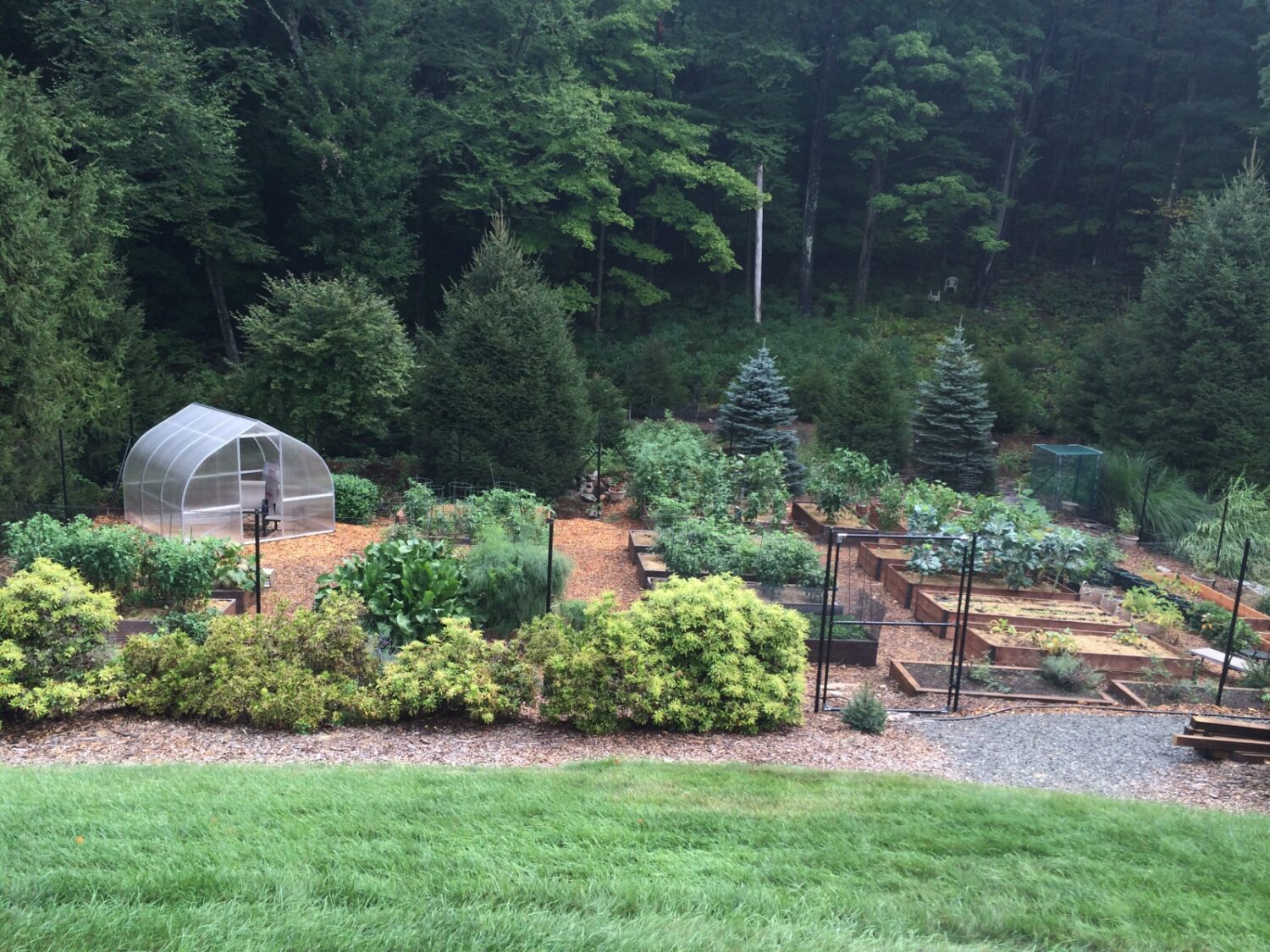
A polycarbonate greenhouse can transform the end of summer from the conclusion of the gardening year into the beginning of another growing season. As daytime temperatures become more comfortable and nights gradually cool, a greenhouse provides a protected environment for fall vegetables, herbs, tender plants, and the many gardening projects that do not necessarily need to end with the first frost.
For gardeners who want to spend more of the year growing, polycarbonate is an especially practical greenhouse glazing material. Its combination of insulation, durability, and light transmission helps create a more stable growing environment while offering the strength needed for a structure designed to remain outdoors throughout the seasons.
Why Choose a Polycarbonate Greenhouse?
One of the most important differences between polycarbonate and tempered glass like our Junior Victorian greenhouse is the construction of the glazing itself. Multiwall polycarbonate contains layers separated by internal air spaces, which provide additional insulation and help slow the transfer of heat through the greenhouse walls. As outdoor temperatures begin to fluctuate in fall, that added insulation can make it easier to maintain a more consistent environment around plants.
Polycarbonate also changes the way sunlight enters the greenhouse. Rather than allowing all of the sun’s rays to pass through as direct light, the material diffuses a portion of that light throughout the growing space. This helps distribute sunlight across plants and growing surfaces instead of concentrating it in the areas receiving the strongest direct exposure.
Durability is another reason gardeners choose polycarbonate. The material is lightweight compared with glass and highly resistant to impact, making it particularly well suited to greenhouses that will remain in place through changing weather conditions year after year.
Extending the Garden Into Fall
Late summer is an ideal time to begin thinking about a second season in the garden. While tomatoes, peppers, and other warm-season crops may still be producing outdoors, cooler conditions create opportunities for vegetables that thrive as temperatures moderate. Lettuce, spinach, kale, arugula, radishes, and many herbs are well suited to fall growing, and the protection of a greenhouse can allow these crops to continue later than they might in an exposed garden.
The greenhouse also becomes valuable when nighttime temperatures begin dropping more quickly than daytime temperatures. Plants growing under cover are protected from direct wind and frost, giving gardeners greater flexibility when deciding when to harvest, move plants indoors, or transition from summer crops to fall varieties.
Of course, a greenhouse does not eliminate the need to pay attention to temperature. Sunny autumn days can still produce considerable heat inside an enclosed structure, which makes ventilation just as important in September and October as it is during warmer months. Roof vents, windows, and doors help release excess heat and encourage air circulation, allowing gardeners to respond to changing conditions rather than relying on the greenhouse simply to stay warm.
A Protected Place for Tender Plants
Extending the vegetable harvest is only one way to use a greenhouse in fall. Gardeners with citrus, tropical plants, tender perennials, or container-grown specimens often face the annual question of what to do with plants that cannot tolerate freezing temperatures. A greenhouse can provide an intermediate protected environment and, depending on the plant, climate, and whether supplemental heat is available, may allow some plants to remain under cover for much of the colder season.
This additional space can also make the seasonal transition more manageable. Instead of moving every sensitive plant indoors at the first hint of cold weather, gardeners have a dedicated place where plants can be organized, monitored, and protected as conditions change.
Planning for Winter Greenhouse Growing
A polycarbonate greenhouse can extend the growing season considerably, but it is important to distinguish between an unheated greenhouse and a heated winter growing space. Polycarbonate glazing helps retain heat more effectively than many thin, single-layer greenhouse coverings, but it does not generate heat on its own. The amount of winter growing that is possible will depend on local temperatures, available sunlight, the crops being grown, the thickness and construction of the glazing, and whether supplemental heating is used.
For many gardeners, the goal is not to recreate summer conditions in January. A greenhouse can instead be used to protect cold-tolerant crops, shelter dormant or semi-dormant plants, and provide a more moderate environment than the exposed garden. Gardeners who want to maintain warmer temperatures for tender plants throughout winter can incorporate an appropriately sized greenhouse heater and monitor both daytime and nighttime temperatures carefully.
Getting an Earlier Start in Spring
The advantages of extending the growing season work in both directions. The same greenhouse that protects plants in fall can become one of the most useful spaces in the garden as winter gives way to spring. Seeds can be started earlier, young plants can develop in a protected environment, and seedlings can gradually acclimate before being planted outdoors.
This is where a greenhouse begins to change the gardening calendar rather than simply add a few weeks to it. Instead of treating fall cleanup, winter planning, seed starting, and spring planting as completely separate activities, gardeners can use the greenhouse as a working space that connects one growing season to the next.
What to Look for in a Polycarbonate Greenhouse
Not every greenhouse described as polycarbonate will offer the same level of performance. Panel thickness is important, but it is only one part of the structure. The construction of the frame, the way the glazing is secured, ventilation capacity, doors, anchoring, foundation design, and overall engineering all influence how a greenhouse performs over time.
When comparing models, look closely at whether the greenhouse uses single-wall, twin-wall, or thicker multiwall polycarbonate and how securely those panels are incorporated into the frame. It is also worth considering the climate where the greenhouse will be installed. A gardener dealing with substantial snow loads or frequent high winds will have different structural priorities than someone growing in a mild climate.
Ventilation should be considered at the same time. A well-insulated greenhouse still needs an effective way to release excess heat, particularly during sunny days when the outdoor temperature may feel relatively cool but the interior temperature can rise quickly. Automatic roof vents can be especially useful because they respond to temperature changes even when the gardener is not present.
The RIGA Polycarbonate Greenhouse
For gardeners researching a more substantial polycarbonate greenhouse, the German-engineered RIGA series offers an interesting example of how glazing, framing, ventilation, and structural design can work together. Manufactured by Hoklartherm, the RIGA is immediately recognizable for its curved roof and sidewall profile, but that shape serves a practical purpose as well as giving the greenhouse its distinctive appearance.
The curved design helps wind move around the greenhouse while allowing snow and debris to shed from the roof more readily than they might from some conventional greenhouse shapes. The RIGA series also uses multiwall polycarbonate glazing secured within a substantial aluminum framework, with different glazing specifications available across the RIGA family depending on the model.
If you are comparing greenhouse construction, our RIGA greenhouse comparison provides a closer look at glazing, framing, ventilation, foundations, and other structural differences worth considering before choosing a greenhouse.
The unusual shape is also worth understanding before judging it purely on appearance. Why the RIGA Greenhouse’s Iconic Onion Shape Is More Than Good Looks explains the engineering behind the design and why the profile has become one of the greenhouse’s defining features.
Gardeners interested specifically in glazing can also read RIGA Polycarbonate Greenhouse vs. Other Options: What Actually Matters for a deeper look at the characteristics that distinguish different polycarbonate greenhouse designs.
Make the Most of the Seasons Ahead
By late summer, it is easy to look at a productive garden and wish the season could last just a little longer. A polycarbonate greenhouse makes that possible in a practical way, providing protection as temperatures change while creating opportunities for fall planting, overwintering, seed starting, and earlier spring growing.
The greatest advantage may be that the greenhouse becomes useful precisely when the outdoor garden begins asking for less of your attention. Instead of packing everything away until spring, you can shift into a different kind of gardening—one that follows the seasons while giving you more control over how quickly one growing period gives way to the next.
With thoughtful crop selection, good ventilation, and a greenhouse suited to your climate, the gardening year no longer has to fit neatly between the last frost of spring and the first frost of fall. There is simply more time to grow.