
Choosing a greenhouse is exciting. Choosing the foundation usually isn’t. Yet the foundation is one of the most important decisions you’ll make before installation. A greenhouse foundation affects stability, drainage, accessibility, maintenance, and even how enjoyable the space is to use over time. A beautiful greenhouse installed on a poor base can develop problems with water, settling, and alignment. A properly prepared foundation helps create a growing space that performs well for years.
The good news is that there is no single perfect greenhouse foundation. The best option depends on your climate, soil, budget, greenhouse size, and gardening goals. This guide explores the most popular greenhouse foundation ideas and helps you determine which greenhouse base is right for your project.
Why a Greenhouse Foundation Matters
Many gardeners focus almost entirely on the greenhouse itself. However, even a premium greenhouse depends on the surface beneath it. A foundation helps keep the structure level, improves drainage, reduces movement, supports anchoring systems, and creates a cleaner growing environment. It can also improve accessibility for carts, wheelbarrows, and everyday greenhouse tasks.
Think of your greenhouse foundation the same way you think about the roots of a plant. It is largely hidden from view, but it supports everything above it.
Before You Build: Evaluate Your Site
Before selecting a foundation, study the installation area. Is the ground level? Does water collect there after rain? What type of soil do you have? Clay soils often hold water, while sandy soils drain quickly. Rocky areas may require additional preparation.
Take time to observe the site during and after a rainstorm. Good greenhouse drainage starts with choosing the right location. Avoid low spots that remain wet for long periods and consider how runoff moves across your property.
Popular Greenhouse Foundation Ideas
Gravel foundations remain the most common choice for home gardeners because they provide excellent drainage and are relatively affordable. Concrete slabs offer maximum permanence and stability. Concrete perimeter foundations combine structural support with flexible interior flooring options. Pavers create a polished decorative look, while pressure-treated wood foundations can be cost-effective for smaller structures. Some gardeners prefer hybrid designs that combine pathways, gravel, and planting beds.
Gravel Foundations
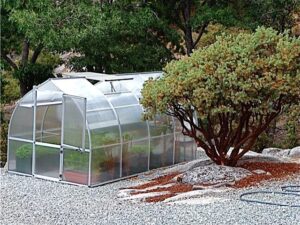
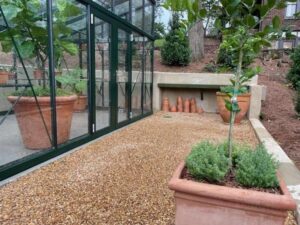
For many homeowners, gravel is the best overall greenhouse base. A typical gravel foundation includes a leveled area, landscape fabric, compacted crushed stone, and a top layer of gravel. Water drains naturally through the surface instead of pooling around the greenhouse.
Advantages include affordability, excellent drainage, a natural appearance, and relatively simple installation. Gravel also works well with raised beds, benches, and container gardening. For most backyard greenhouse projects, gravel offers the best balance of cost and performance.
Concrete Foundations
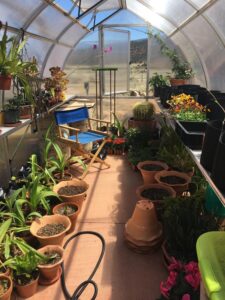
Concrete slabs provide a durable and permanent solution. They create a clean, level surface that is easy to sweep and maintain. Concrete is particularly useful for larger greenhouses, greenhouse workshops, and installations where carts and heavy equipment will be used regularly.
The primary drawbacks are cost and drainage planning. Because water does not drain through concrete, proper grading and water management become especially important. Despite the added expense, many gardeners appreciate the longevity and low maintenance of a concrete foundation.
Pavers, Brick, and Decorative Flooring
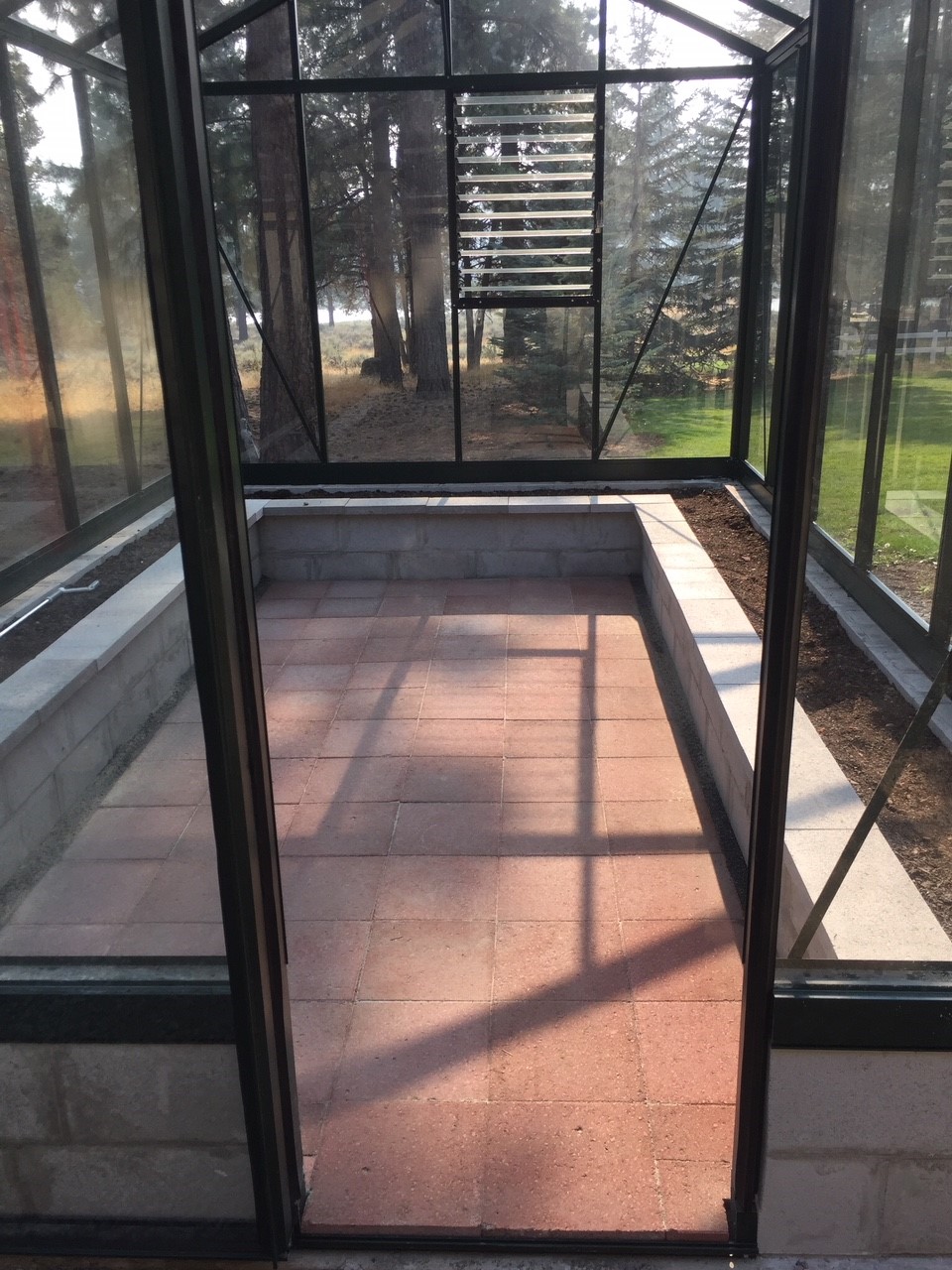
If aesthetics matter as much as functionality, pavers and brick are excellent choices. These materials can transform a greenhouse into a destination within the landscape. Pavers work especially well when the greenhouse is located near patios, garden paths, or outdoor living areas.
A properly installed paver system requires a compacted base to prevent settling. While installation may be more labor-intensive than gravel, the finished appearance can be stunning.
The Importance of Greenhouse Drainage
Drainage deserves special attention. Poor drainage can lead to standing water, algae, muddy walkways, and ongoing maintenance issues. Water should always move away from the greenhouse rather than collecting around it.
Common drainage solutions include gravel borders, gutters, downspouts, grading, and French drains. Addressing drainage concerns before installation is far easier than trying to solve problems after the greenhouse is already in place.
Common Foundation Mistakes
One of the biggest mistakes gardeners make is skipping site preparation. Another common error is choosing a foundation based only on appearance without considering how the greenhouse will actually be used. Some homeowners underestimate the importance of accessibility and future expansion.
Planning ahead can save significant time and expense. Consider how your greenhouse needs may evolve over the next five to ten years.
Frequently Asked Questions
Do you need a concrete slab? Not necessarily. Many greenhouses perform beautifully on gravel foundations. Can a greenhouse sit directly on grass? Generally, this is not recommended because grass creates uneven and often muddy conditions. Is gravel good for greenhouse flooring? Absolutely. Gravel remains one of the most popular options because of its drainage and affordability.
Final Thoughts
The best greenhouse foundation is the one that supports your goals, your climate, and your gardening style. For many gardeners, gravel provides the ideal balance of drainage, affordability, and simplicity. Others may prefer concrete, pavers, or hybrid layouts.
Whatever foundation you choose, take the time to prepare it properly. A strong foundation supports a healthy, productive greenhouse and helps ensure years of successful growing. After all, every great greenhouse starts from the ground up.