
Written by Lauren Click, Founder and Executive Director of Let’s Go Compost
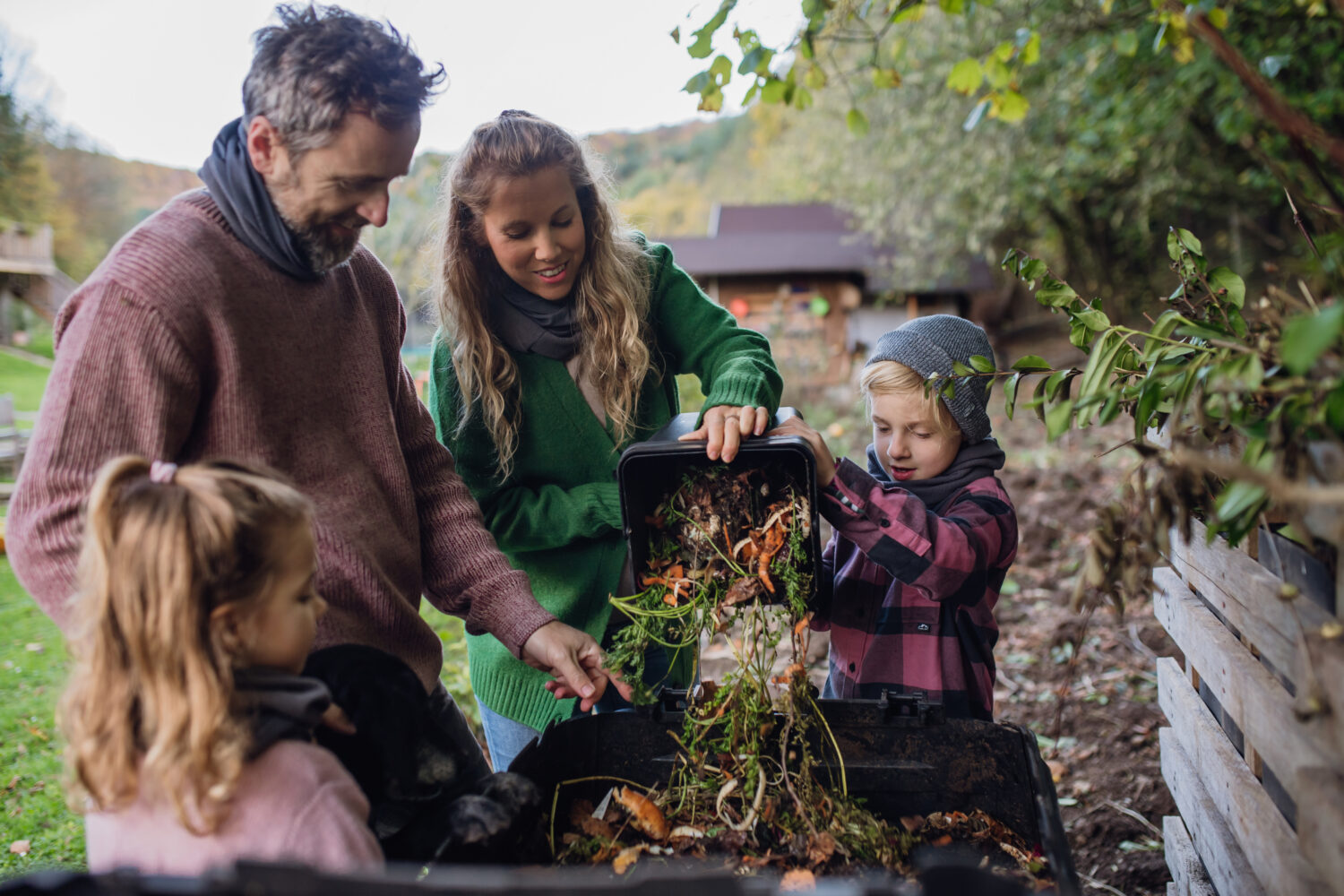
Composting with kids turns everyday food scraps into a hands-on lesson about soil, science, food waste, and the natural systems happening all around us.
Whether you are a parent composting at home, an educator introducing composting at school, or a family starting your first bin together, you do not need to make the process complicated. A composting system, food scraps, carbon-rich materials, and a little curiosity are enough to get started. At Let’s Go Compost, we believe some of the best environmental education starts when kids have something they can see, touch, measure, question, and investigate.
Why Is Composting Good for Kids?
A compost bin can become a living science laboratory! Children can observe decomposition, investigate decomposers, track changes over time, measure temperature and moisture, and watch organic materials gradually transform into compost. Composting also makes an abstract concept like food waste tangible. Instead of a banana peel disappearing into a trash can, children get to ask an important question: What happens next?
For educators, those observations can connect naturally to lessons about ecosystems, microorganisms, nutrient cycling, soil health, agriculture, and human impacts on the environment.
How to Start Composting with Kids
The best approach is usually the simplest one.
1. Pick a composting system that fits your space
Composting does not require one particular type of bin. Families, schools, and community organizations can choose a system based on their available space, climate, volume of organic material, and maintenance needs.
2. Learn the difference between greens and browns
“Greens” are generally nitrogen-rich materials, including many fruit and vegetable scraps. “Browns” are carbon-rich materials such as dry leaves, shredded cardboard, and appropriate paper products.
A common beginner mistake is adding plenty of food scraps without enough carbon-rich material. At Let’s Go Compost, we recommend beginners think in terms of roughly 75% browns and 25% greens as an approachable starting point, adjusting as needed for their specific composting system.
3. Start small
More food scraps do not automatically create better compost. Adding too much material too quickly can contribute to excess moisture, unpleasant odors, or pests. Start with manageable amounts and learn how your compost responds before increasing the volume. This is also a great lesson for kids: composting is about creating the right conditions for decomposition, rather than simply throwing food into a bin.
4. Turn kids into compost scientists
Give children questions to investigate. What materials disappear first? Does the compost feel too wet or too dry? Is the pile warm? Has its volume changed? What happens to a banana peel after a week? What about a month?
Keep a compost journal and record observations regularly. Kids can draw pictures, take photographs, measure temperatures, or create graphs showing changes over time.
Easy Composting Activities for Kids
One of the simplest activities is a household or classroom food scrap audit. Before composting, weigh the scraps collected during a day or week. Keep a running total and calculate how much material stays out of the trash over a month. Kids can also compare decomposition rates. Add different compostable materials and make predictions about which will break down fastest. Return regularly to record what has changed. When the compost is finished, complete the cycle. Add it to a garden, landscape, or container plant and talk about how nutrients from once-discarded organic materials are returning to the soil.
Common Composting Mistakes Families Can Avoid
If a compost bin develops an unpleasant odor, becomes excessively wet, or attracts unwanted pests, adding more food scraps is rarely the solution. Check the balance of materials first. Excess moisture or insufficient carbon-rich material can often contribute to problems.
Families should also remember that a product labeled “compostable” does not necessarily belong in every composting system. Check what your specific system can process before adding unfamiliar materials. And always remove plastic stickers, packaging, tape, rubber bands, and other contaminants before organic materials enter the compost.
The Best Composting Tip? Start With What You Have
You do not have to compost everything perfectly from day one. Start with what your family, classroom, or community can realistically manage. One banana peel can become a lesson about decomposition. A handful of dry leaves can introduce the carbon cycle. A compost bin can become an ongoing experiment in biology, chemistry, soil science, food systems, and environmental stewardship.
Let’s Go Compost is a 501(c)(3) nonprofit making composting and food waste education accessible to communities everywhere. Explore our free learning resources for schools, libraries, Scout troops, families, and other community organizations, with ready-to-use activities, lessons, and tools designed to make composting easier to teach and understand. For continued learning, visit the Let’s Go Compost blog, updated weekly with practical composting tips, troubleshooting guidance, and seasonal advice, or follow along on social media for educational videos and step-by-step composting content. Learn more about composting at letsgocompost.org and @letsgocompost.