Call Now: (877) 760-8500 Design Your Greenhouse Partner Portal
Jump to:

Overview

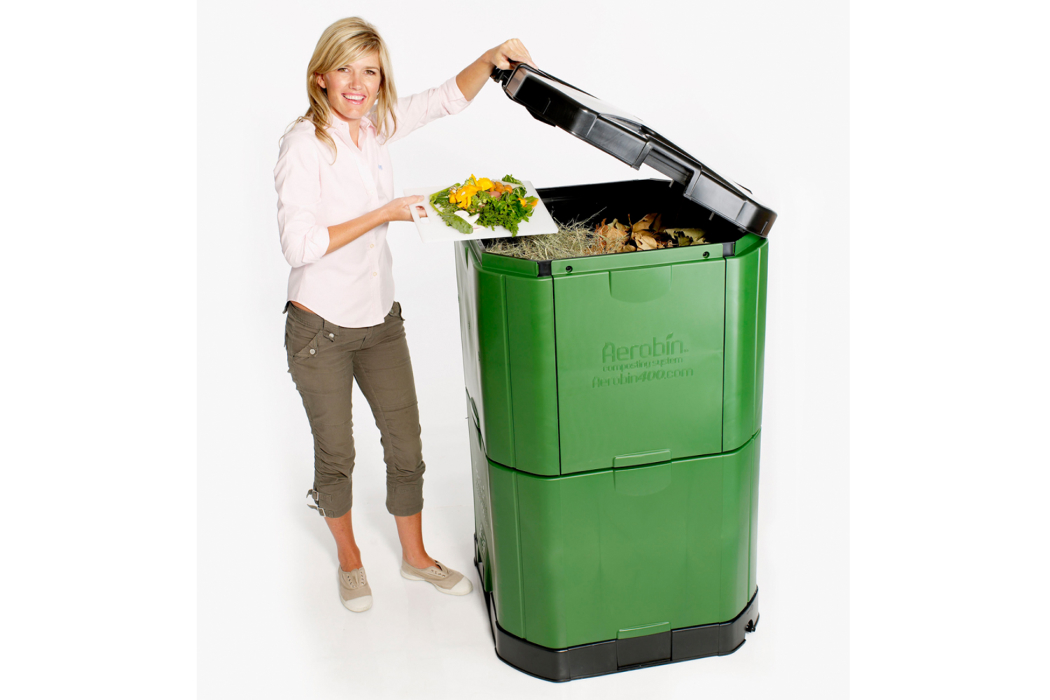
The Aerobin composter is built for gardeners who want a reliable, high-performance composting system that works year-round. Designed with ease and results in mind, it uses advanced engineering to support healthy organic breakdown while integrating seamlessly into your garden routine.

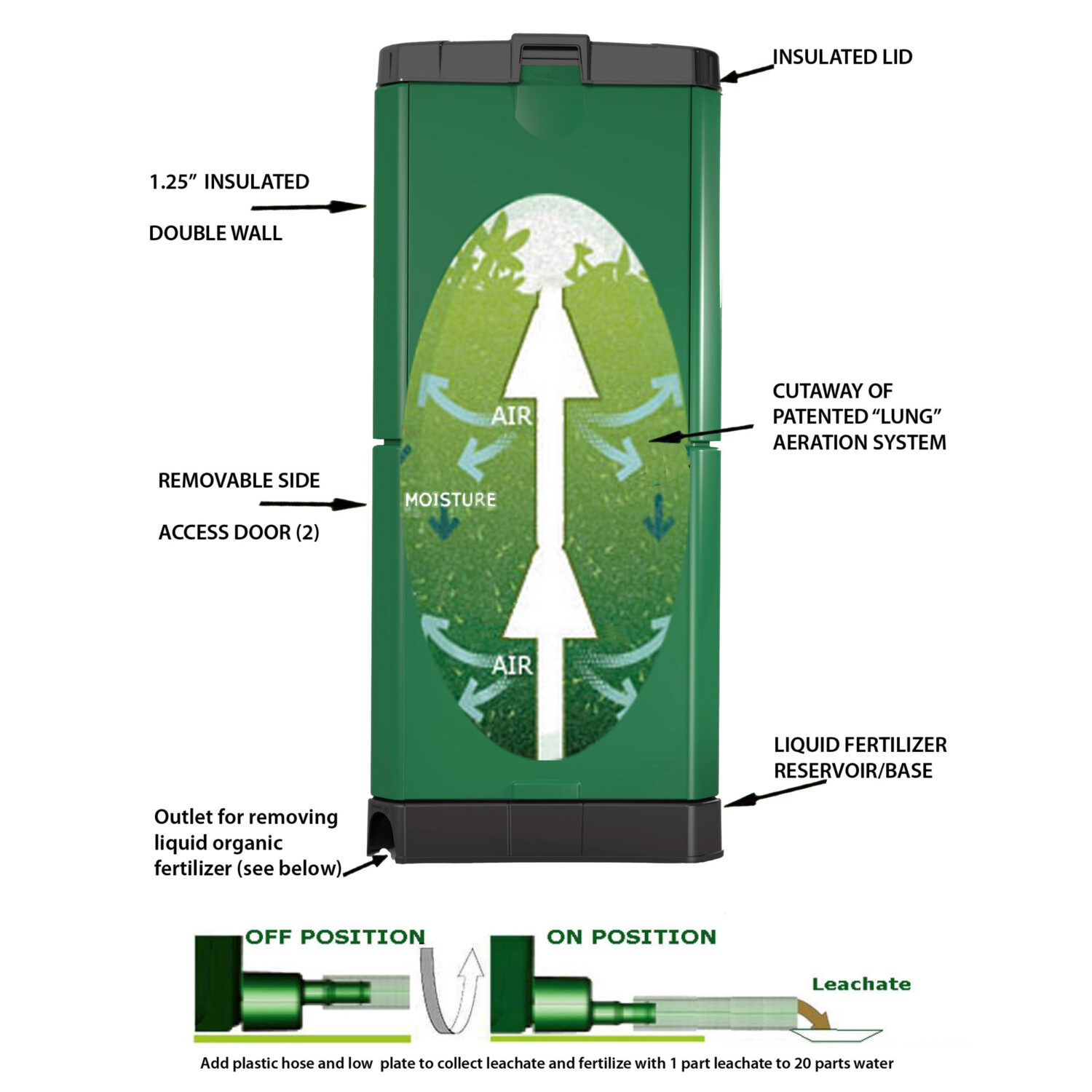
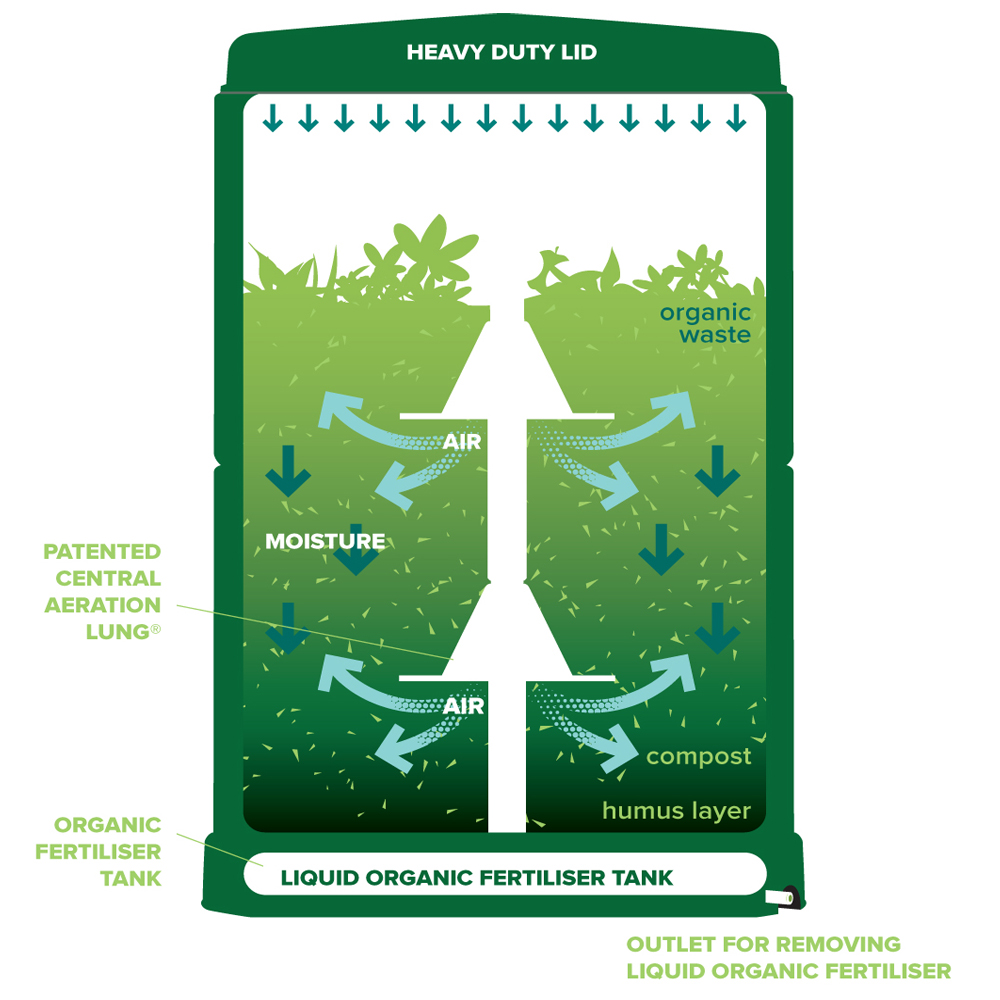
At its core is a patented internal “lung” or aeration tube that draws in fresh air and releases warm gases naturally, promoting aerobic composting without the need to turn or mix the contents, and it doesn’t even need sun exposure.

Double-walled insulation in both side panels and lid keeps internal temperatures high even in cooler weather, accelerating decomposition and reducing odors. Finished compost is conveniently accessed via the lower side doors, and a built-in leachate tank with a hose and tap captures nutrient-rich compost “tea” for use as a plant fertilizer.

Because the Aerobin handles many of the key composting variables—airflow, temperature, moisture—it frees you up to focus on what matters: adding kitchen and garden waste and harvesting high-quality compost. Whether you’re supporting raised beds, vegetable plots, or container gardens, the Aerobin delivers dependable performance, helping you grow more productively and sustainably.
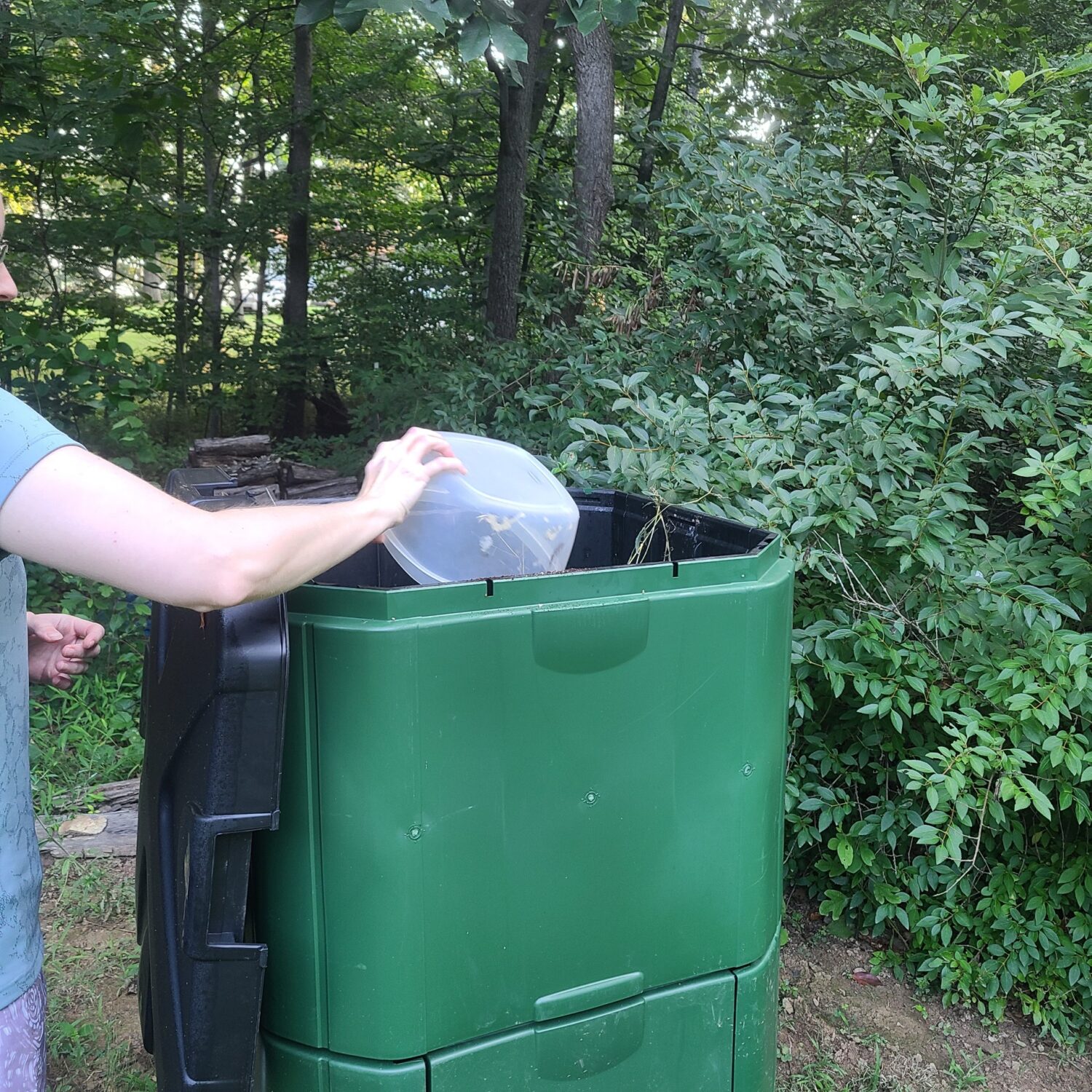
Credit: Urban Window Farmer

Specifications

Color: Green Gray
Material: Virgin polypropylene & high-density polyethylene

Features:

● Insulated
● No turning/work required
● Lid has hooks to hang from side of bin
● Two doors open at the base for compost removal
● Closed system strongly deters rodent access
● Reservoir at base collects leachate for “compost tea”
● Drain hose with cutoff valve allows leachate drainage
● Patented lung system “self-aerates” the compost, and eliminates need for turning
● Thick double-wall sides with polystyrene retain heat year-round
● Processes compost quickly and with extremely minimal maintenance!Effortless, year-round composting for the serious gardener. The Aerobin turns kitchen scraps and garden waste into rich compost with minimal effort and no turning.

Aerobin 200

Suggested Retail: $315.00
Dimensions: 20” x 20” x 46" H
Capacity: 55 gal
Weight: 30 lbs

Aerobin 400

Suggested Retail: $449.00
Dimensions: 29” x 29” x 47” H
Capacity: 111 gal
Weight: 50 lbs

Frequently Asked Questions

I purchased an Aerobin 200 and I’m missing one of the cones for the lung system

Oftentimes, when the Aerobin 200 is shipped, one of the cones gets wedged underneath the base. Before contacting customer service, check to see if the cone is wedged underneath the base.

The cones do NOT have holes in them for air flow. I thought these were tool free assembly?

Correct, this is a tool free assembly – no holes are needed in the cones.

As the compost heats up, the air in the tubes rises, creating an inflow of air from the bottom of the composter.   The air then travels up the center pipe to the bottom of the cone.  The cone does not have holes, so the air flows out on the underside of the cone where the tube connects.  The ribs on the cone then allow the air to flow out under the bottom rim of the cone into the surrounding compost.  Some will also flow around the first cone and up into the second tube – when it reaches the second cone, the same process happens, and air flows into the surrounding compost.  If there were holes in the cones, then air would only flow through the tube and out the top – never reaching the compost in the center.

What are the Aerobin composters made of?

Aerobin is currently made of 100% virgin plastic e.g. PP(Polypropylene) & HDPE (High-density polyethylene) – it’s a 80/20 blend and a BPA free product and does not use chemical Phthalates in our production process.

My Aerobin lid blew off in a high wind storm.

The Aerobin lid can be secured using a cable tie through the edge of the lid and through the top of the side wall panel. Or you can use a latch with a keyed padlock. This can be effective at keeping bears out.

Can I collect leachate and use it for fertizer? How much should I dilute it?

Yes, the Aerobin 200 & 400 have a leachate tank in the base of the composter. These composters come with a tube with a shut off valve that is connected to the tank and the leachate tea can be easily collected. The leachate tea needs to be diluted with water (1 part leachate tea to 10-15 parts water, for sensitive plants a ratio of 1:20) This can be used to fertilizer your outdoor plants.

How does the lung system work in the Aerobin?

The uniquely designed lung system in the Aerobin allow for air flow in the center of the bio mass. Oxygen is evenly distributed throughout the bio mass so you don’t have to turn the compost.

I have leachate leaking out the seams of the side of my Aerobin composter.

Occasionally the leachate spigot or tube will get clogged with debris that has falling through the drain holes in the base of the composter. The tank doesn’t empty so the compost retains the mositure and it can start leaking from the seams. Use a coat hanger to stick in the tube and try to remove the debris. If the leachate tube is not plugged, remove that from the black spigot. If it’s tough to pull off, pour hot water on the tube to soften it and it should be easier to pull off. Use the coat hanger to dislodge any debris from the spigot.

The access panel on my Aerobin composter is stuck in place and I can’t access my compost.

There is a lip on the inside of the door that gets weighed down with compost. Use a garden tool with a long handle or a pole and prop it under the handle of the Aerobin access panel. Put something under the handle about midway down the handle or pole to create a lever and push down and this will lift the access panel handle. The access panel should raise up about 1/2″. Pull out the bottom of the panel and it should pull away from the composter. You’ll want to put down a tarp or a large piece of cardboard in front the opening before you open the access panel to catch any of the loose compost.

Do I need to add water to my Aerobin composter?

The material in your composter should be as damp as a wrung out sponge. You should be able to squeeze a handful of it and it should hold together. If it doesn’t, it’s too dry and you need to add more nitrogen rich materials i.e., vegetable or fruit scraps with a high water content. If you live in a hot dry climate you may have to sprinkle water in your compost bin from time to time to maintain the moisture level.

Why is there no bottom to the composter?

The open base design allows micro organisms and worms from the soil to access the bio mass to speed composting.

Is the Aerobin rodent proof?

For the most part, they are because they have a solid base. Placing the Aerobin on a platform of pavers or a wooden surface will prevent the rodents from chewing on the bottom edge of the base. However, if your composter is tucked in a corner, persistent rodents can chew through just about anything if left undisturbed for extended periods of time. Rodents don’t like to be out in the open or in an area that is heavily traveled with foot traffic.

There are a lot of fruit flies/gnats in my compost is there anything I can do?

Insects in and around your compost are considered normal. The help breakdown compost. Fruit flies/gnats have a 1–3-month breeding season and are attracted to compost for a food source and breeding environment. They will disappear after that. It’s a normal part of aerobic composting. You can make the compost inaccessible to fruit flies/gnats by covering the top layer of compost with about 1″ of grass clippings or by using some old towels. Leave the cover off for 10 minutes or so to allow them to leave because they can’t access the food source.

Can I compost human waste or dog waste?

No, the average backyard composter does not get hot enough to kill pathogens that can cause disease. Feces from grass-eating animals, such as cows, chickens, or rabbits, is ok, but it has to “cure” for several months, or they will burn your plants.

The material in my composter is not breaking down.

When adding material to your composter, premix your brown and green material together before adding it to your composter. This way you have a diverse and balanced mix of organic material. Nitrogen rich items such as green grass clippings, coffee grounds and chicken manure can be a catayst for composting.

The material in my composter is not breaking down.

When adding material to your composter, premix your brown and green material together before adding it to your composter. This way you have a diverse and balanced mix of organic material. Nitrogen rich items such as green grass clippings, coffee grounds and chicken manure can be a catayst for composting.

Do I need to add water to my composter?

The material in your composter should be as damp as a wrung out sponge. You should be able to squeeze a handful of it and it should hold together. If it doesn’t, it’s too dry and you need to add more nitrogen rich materials ie, vegetable scraps with a high water content. If you live in a hot dry climate you may have to sprinkle water in your compost bin from time to time to maintain the moisture level.

A critter chewed a hole in the side of my composter, what should I do?

We sell replacment parts for the composters. Contact our customer service (512) 407-8500 or fill out the “Contact Us” form on the bottom of this page. If rodents are a problem you can wrap hardware cloth around the bottom and sides if you need. Putting the Aerobin on a solid base also prevents the rodents for getting to the bottom edge where they can start chewing.

Resources & Documentation

Find Your

Retailer

Interested in finding this and more exclusive Exaco products and accessories? Find an authorized retailer near you!

Find a Retailer →

Join Our Mailing List!

Discover inspiration, tips, and seasonal ideas to embrace greenhouse living and bring natural beauty into your everyday life.

"*" indicates required fields

This field is for validation purposes and should be left unchanged.