
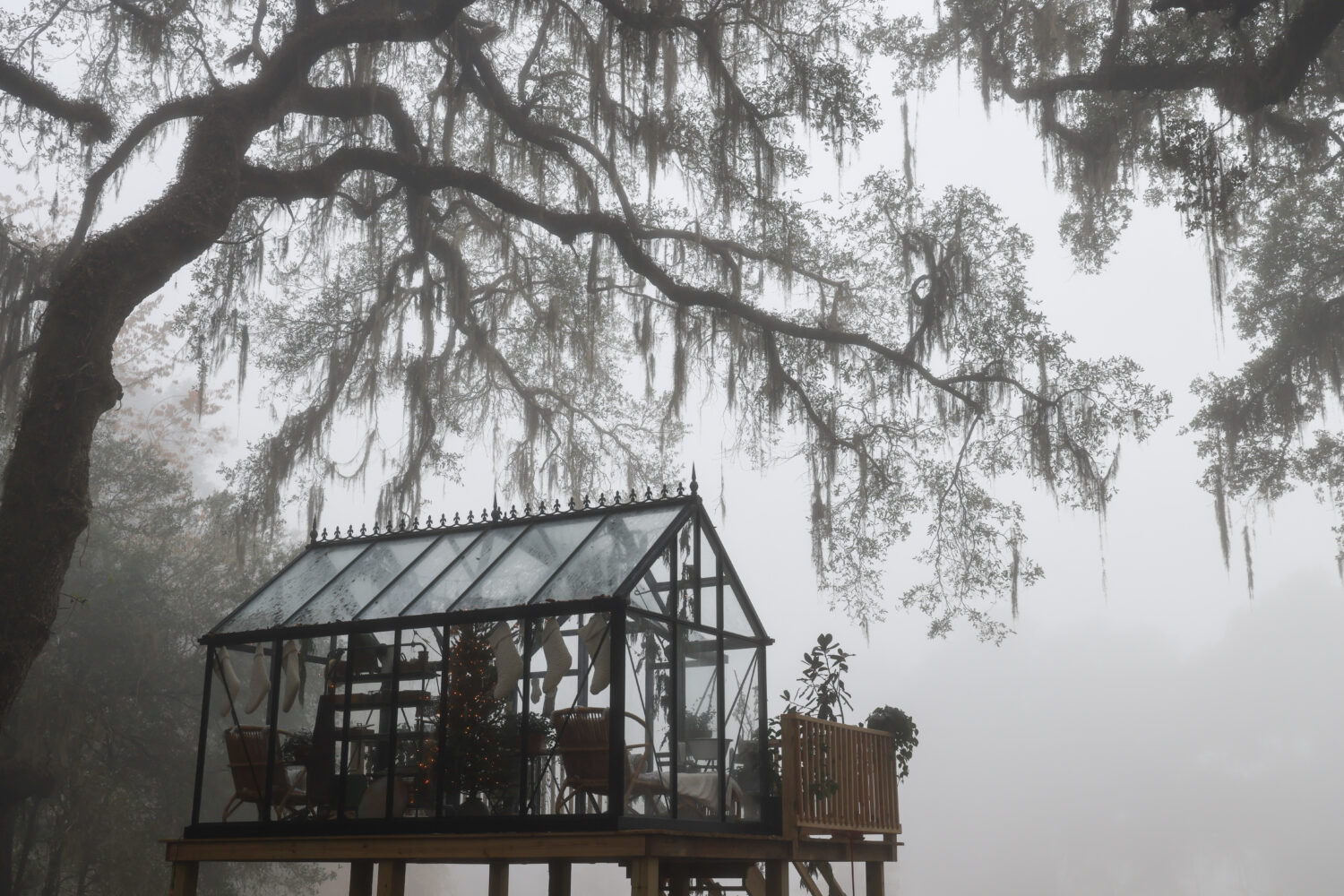
A Victorian greenhouse takes on an entirely different kind of magic in winter. The garden may be quiet, the days shorter, and the air a little colder, but behind the glass, there is still room to gather, grow, decorate, and linger.
During the holidays, a greenhouse can become one of the most memorable spaces at home. Think warm lights reflected in glass, pots of evergreen tucked beside winter herbs, a small table set for brunch, or a quiet chair waiting for coffee on a cold morning.
And while these structures are first and foremost beautifully engineered places to grow, Victorian greenhouses also have a way of becoming garden rooms — spaces you simply want to spend time in.
A Holiday Table Surrounded by the Garden
There is something wonderfully unexpected about carrying part of the holiday celebration outside.
A table inside a glass greenhouse can feel intimate without feeling formal. Add a few candles or battery-operated lanterns, winter greenery, linen napkins, and simple seasonal branches, and the greenhouse itself does most of the decorating.
Even after the leaves have fallen, the surrounding garden remains part of the view. Frost on the lawn, bare branches, winter sunlight, and the glow of the greenhouse after dusk all become part of the atmosphere.
It does not need to become a formal dining room, either. Sometimes the best use is simply a little corner for morning coffee, an afternoon drink, or a place to sit with friends before dinner.
Royal Victorian Greenhouses: Made for a Little Winter Drama
For classic European character, the Janssens Victorian greenhouses are difficult to overlook.
The Royal Victorian has the proportions and architectural detailing that immediately make it feel like part greenhouse, part garden destination. Tall glass walls, decorative ridge details, and traditional lines create a beautiful backdrop for both plants and seasonal gatherings.
Imagine an evergreen wreath against the glass, citrus or rosemary growing nearby, and a small table tucked beneath the winter sun. At night, warm lighting turns the structure into a glowing focal point in the garden.
That is part of the appeal of a glass greenhouse: even during the quietest months of the year, the garden still feels close.
The Junior Victorian: A Smaller Garden Room
You do not need an enormous garden to create that feeling.
The Janssens Junior Victorian greenhouse brings traditional Victorian styling into a more compact footprint, making it especially appealing for smaller gardens and urban yards.
The Junior Victorian uses the same heavy-duty style of framing found in the larger Janssens Victorian range, paired with 4 mm tempered safety glass and a steeper roofline. Its smaller scale makes it easy to imagine as a personal winter retreat: a potting bench at one end, a favorite chair at the other, perhaps a tray of seedlings beginning long before spring arrives outside.
For holiday hosting, smaller can actually feel especially charming. A greenhouse does not need to seat twelve people to become part of the celebration. Sometimes two chairs, a little table, and a warm drink are enough.
Orangeries Were Always Meant for Winter
The idea of enjoying plants under glass during winter is hardly new.
Orangeries were historically built to protect citrus and other tender plants through colder European seasons. Over time, they became architectural spaces as much as horticultural ones — places where growing, beauty, and everyday life naturally overlapped.
That spirit continues in models such as the Junior Orangerie, with its distinctive T-shaped floor plan and bright glass interior. Janssens also offers larger Royal and specialty Orangerie greenhouses for gardens where the structure is intended to become a true focal point.
It is easy to understand why they work so beautifully as garden rooms. The added architectural shape creates natural areas for seating, plants, a table, or simply a place to pause and look back out at the garden.
Let the Greenhouse Change With the Season
One of the nicest things about a Victorian greenhouse is that it never has to serve only one purpose.
In December, it might hold evergreen branches, cyclamen, winter herbs, and a table ready for drinks. In January, it becomes a quiet place to sit in the afternoon sun. By February and March, seed trays begin appearing and the growing season starts all over again.
Then spring arrives, the doors open, and the greenhouse becomes part of the garden once more.
That rhythm is what makes these spaces so special. They are not simply structures placed in the garden. Over time, they become part of how the garden is experienced.
Create a Garden Room You Will Use All Year
The holidays give us a good excuse to gather, decorate, and make everyday spaces feel a little more special. A greenhouse just happens to offer one of the loveliest settings for it.
Whether you picture a compact Junior Victorian, a larger Royal Victorian, or an architectural Orangerie, the idea is the same: create a place that keeps you connected to the garden even when winter arrives.
Explore our Victorian greenhouses and garden structures and find the style that feels right for your garden.