
Overview
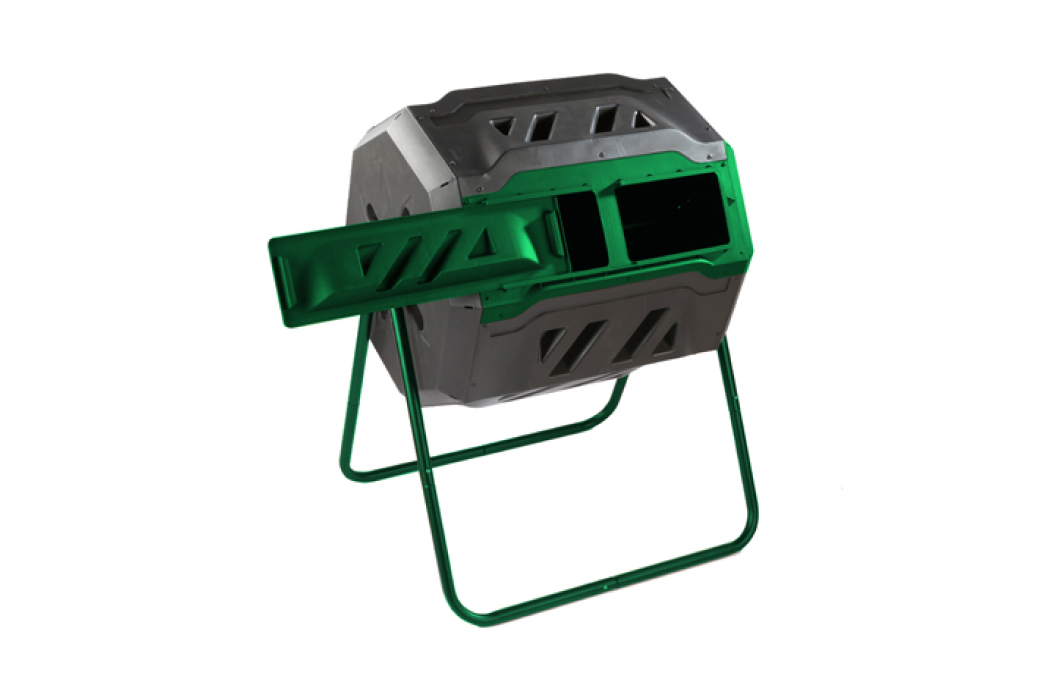
The Mr. Spin Compost Tumbler makes home composting easier with a rotating design and two separate composting chambers. Its 43-gallon capacity provides plenty of room for everyday organic waste. The compact footprint also works well in smaller yards and garden spaces.
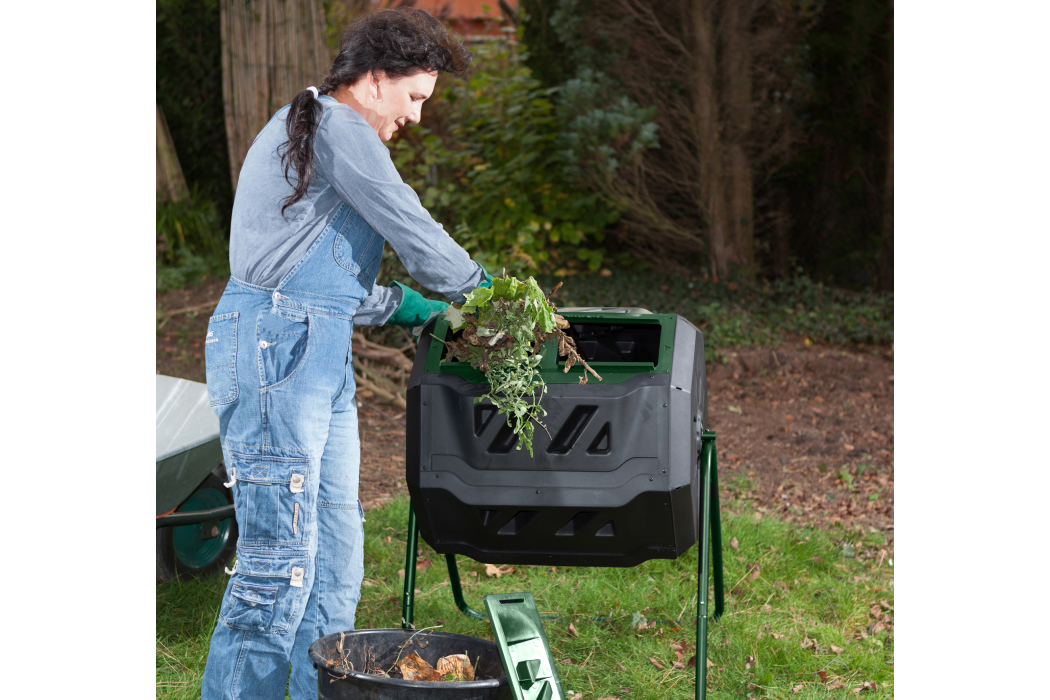
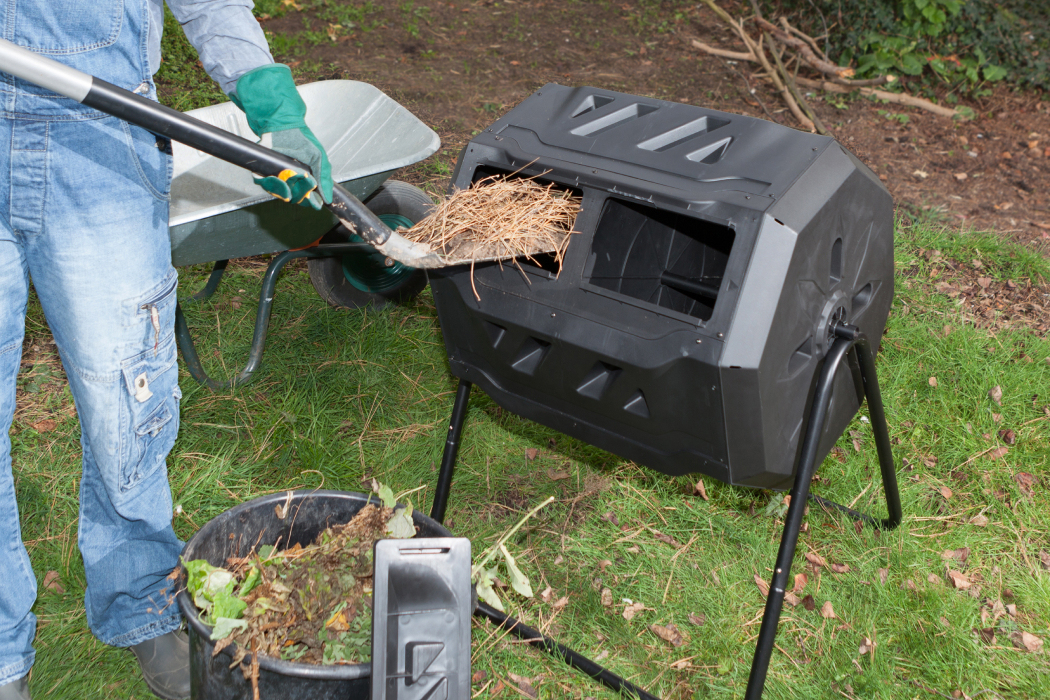
The dual-chamber design lets you manage two batches of compost at different stages. Fill one chamber with fresh kitchen and garden waste while the other batch continues to break down. When one side is finished, you can keep the composting cycle going in the second chamber.
Regular mixing is simple. Just rotate the drum around its central axis to mix the contents. This eliminates the need to manually turn organic material with a shovel or garden fork. Adjustable air vents also help you manage airflow inside the compost tumbler.
A sturdy 18-gauge tubular steel frame supports the rotating drum and keeps it securely elevated. The compact design makes Mr. Spin a practical choice for gardeners who want to compost kitchen scraps and garden waste without maintaining a large traditional compost pile.
Recycled polypropylene makes up the black components, while virgin plastic forms the green components. The durable materials, sturdy steel frame, and easy-turning design create a practical composting system for everyday use.
Whether you’re learning how to compost or want a dual-chamber compost tumbler for ongoing batches, Mr. Spin makes the process simple. Turn everyday kitchen and garden waste into useful compost for raised beds, vegetable gardens, flowers, and other outdoor growing spaces.